
Occupational Health Assessments: A Guide for Employers
An occupational health assessment is a clinical evaluation of how an employee’s health and their job affect each other, carried out so that an employer can make fair, informed decisions. This guide explains the main types of assessment, how to choose between them, who carries them out, and what you receive afterwards.

What is an occupational health assessment?
An occupational health assessment looks at what an employee can currently do, what would help them do it safely and sustainably, and what the employer needs to know to act. It is advice, not a verdict. Occupational health does not sign people off or make the decision. The employer still decides what happens next.
The word “assessment” covers several different things, and the questions asked differ by situation. Start from the decision you need to make, not the condition. A common mistake is asking for a general assessment when the situation calls for something specific, such as a fitness check for a safety critical role or ongoing health surveillance, and then finding the report does not answer the question that mattered.
The main types of assessment
Pre-employment and pre-placement
Carried out before someone starts a role, to understand whether the job needs any adjustments and to manage health from the first day. Used well, it reduces the risk of avoidable sickness absence later.
Management referral
Used when an employer needs advice about a specific employee: repeated or prolonged absence, or a health condition affecting work. The manager sets the questions and receives a report addressed to them. Our guide to occupational health referrals covers how to make one well.
Return to work
Used after significant illness, surgery or injury, to plan whether a return is realistic, in what form, and over what period.
Fitness for work and adjustments
Used where an employee’s health may be affecting their ability to do the job in full, or where changes to the role may help. The assessment focuses on what the employee can and cannot do, not on the diagnosis.
Safety critical and licensed roles
Where a health change could put the employee or others at risk, such as driving, operating machinery or working at height, assessments include checks specific to that risk. See safety critical medicals, DVLA and D4 driver medicals and ENG1 seafarer medicals.
Health surveillance
A different kind of assessment: planned, repeated checks for employees exposed to hazards such as noise, vibration or dust, rather than a one-off response to a specific concern. See health surveillance and mobile health surveillance. For HAVS specifically, see our HAVS guide for employers.
Mental health, musculoskeletal and wellbeing
Some cases need a specialist focus. We offer psychiatry, musculoskeletal and wellbeing services. If burnout is the concern, see understanding burnout and how occupational health can help.
Which assessment does your situation need?
- A new starter, or a role change: pre-employment or pre-placement.
- Someone has been absent, or their health seems to be affecting work: management referral.
- Someone is coming back after illness or injury: return to work.
- An employee has asked for changes to their role, or you are unsure they can do it in full: fitness for work and adjustments.
- The role carries safety, driving or licensing requirements: safety critical, DVLA or ENG1 assessment.
- Employees are exposed to noise, vibration, dust or similar: health surveillance.
- You are not sure: ask us before you submit. A short conversation is usually enough to establish the right route.
Who carries out the assessment
Assessments are carried out by occupational health advisers (OHAs) or occupational health physicians (OHPs). Our doctors are qualified occupational physicians registered with the GMC, and our nurses are registered with the Nursing and Midwifery Council. The right choice depends on the question you need answered, so tell us what you need to know and we will advise.
How assessments are delivered
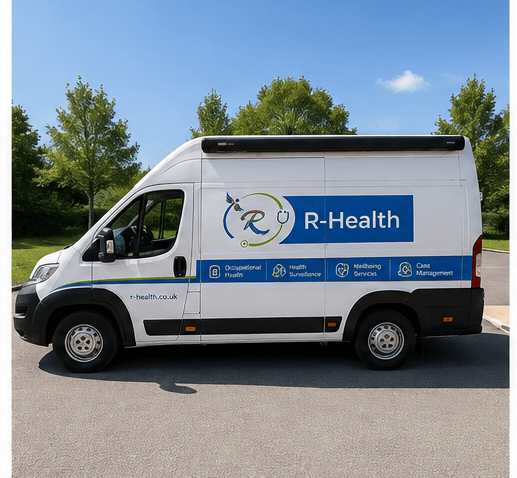
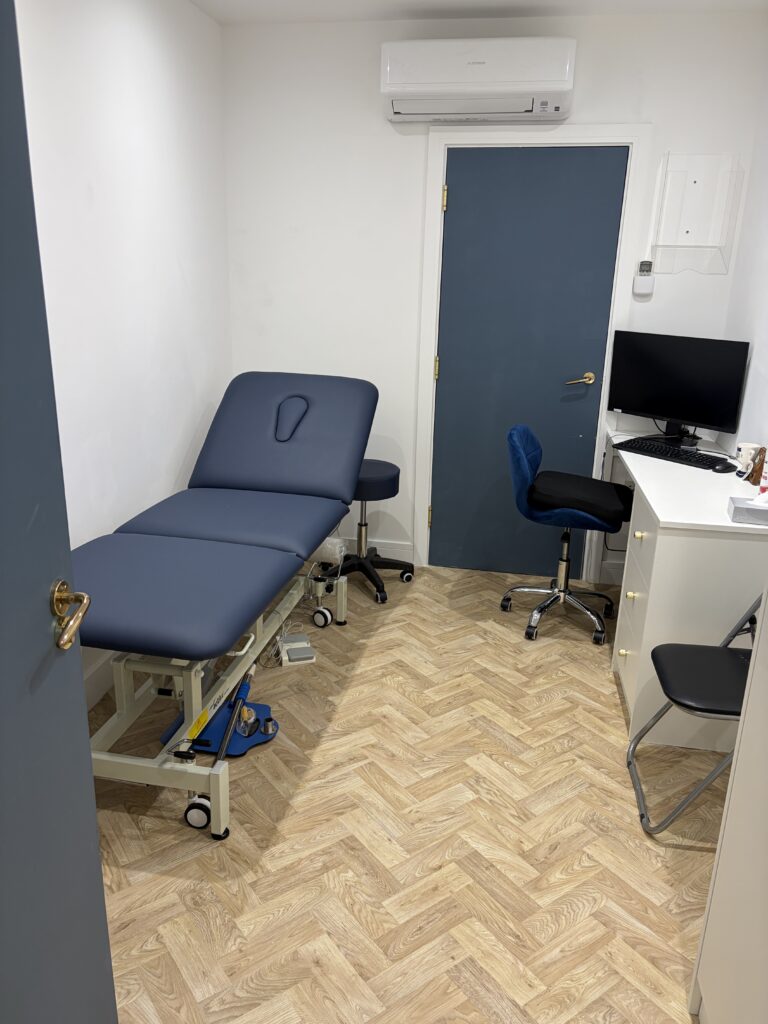
We provide assessments remotely by Teams or telephone, on your premises, or at our clinic in Edgware, north-west London. We offer everything from single appointments to full days of OHA or OHP sessions.
What an assessment involves for the employee
The employee is told in advance what will be covered and how the outcome will be reported. The clinician takes an occupational and clinical history, discusses the demands of the role, and assesses how the condition affects the ability to do the job. No treatment is provided, and the clinician does not take over care from the employee’s GP. The referral guide describes the appointment in more detail.
What you receive

A written report follows, answering the questions the referring manager asked, in language a manager can act on without interpreting clinical terms. It describes functional effect and recommendations rather than clinical detail. The employee’s consent is required for the assessment and for the report to be released.
The report is the basis for a conversation, not a decision that has already been made. What to do with it is covered in the referral guide.
Frequently asked questions
Is an occupational health assessment a diagnosis?
No. The focus is functional: what the employee can and cannot currently do in their role, and what would change that.
Can an employee refuse an assessment?
Yes. Attendance cannot be compelled and no one can be assessed without consent. Most refusals come from not understanding the purpose, so explain beforehand what will and will not be shared. More in the referral guide.
What is the difference between an assessment and health surveillance?
An assessment usually answers a specific question about one employee’s health and their job. Health surveillance is the planned, repeated checking of employees exposed to a workplace hazard. Where a risk assessment identifies a hazard covered by health and safety legislation, it is a legal duty rather than a choice.
Does occupational health replace the employee’s GP?
No. The clinician gives advice on work, not treatment, and does not take over care from the employee’s GP.
Do you train line managers to use occupational health?
Yes. As part of onboarding we provide video webinar training to all line managers, and refresher sessions during our partnership.
Arranging assessments with R-Health
R-Health is physician-owned and physician-run. See our occupational health assessment services for what we cover, or get in touch to discuss the assessments your organisation needs.