
Guide for employers
Phased Return to Work: A Guide for Employers
A phased return to work lets an employee build back up to their normal hours or duties gradually after a period of absence, rather than returning in full on the first day. This guide covers who recommends one, whether a fit note is needed, how long it should last, what to pay, what the plan should set out, and what to do when it is not working.

Key points
- A phased return builds an employee back up to normal hours or duties gradually after absence.
- An employee does not need a new fit note to come back, and fit note advice is not binding.
- There is no set length. Agree it, put it in writing and review it.
- Hours worked are paid at the usual rate. Pay for hours not worked depends on the contract and policy.
What is a phased return to work?
Acas describes a phased return as when someone who has been absent gradually builds up to returning to work. In practice that usually means one or more of:
Reduced hours
Shorter days or fewer days at first, building back to the normal pattern.
Different work
Other duties for a period while the employee recovers.
A lighter workload
Normal hours, with less to do while the employee rebuilds capacity.
It is most common after long-term illness, surgery, serious injury or bereavement. The aim is a return that holds.
A phased return is temporary and has an end point. If the need for changes looks permanent, that is a different conversation about lasting adjustments.
Who recommends a phased return?
A phased return usually comes from one of three places.
1
A fit note
A healthcare professional can assess an employee as “may be fit for work” and recommend a phased return, described on the fit note as a gradual increase in work duties or hours. Fit notes can be issued by doctors, nurses, occupational therapists, pharmacists and physiotherapists.
2
An occupational health assessment
A return-to-work assessment after significant illness, surgery or injury looks at whether a return is realistic, in what form and over what period. The report sets out recommendations a manager can act on.
3
Agreement
A phased return can also be agreed directly between employer and employee, without either of the above.
Advice, not a decision
Whichever route it comes from, the recommendation is advice. Fit note advice is not binding: the employer and employee discuss it and agree what is workable. Occupational health advises; the employer decides. Where the employee is disabled, Acas is clear that the employer must also make reasonable adjustments to support them.
Do you need a fit note for a phased return to work?
Short answer: no
Not to come back. GOV.UK guidance says an employee can return to work whenever they feel able, including before their fit note ends, and does not need to see their healthcare professional again first.
Where the fit note says “may be fit for work” and recommends a phased return, that is the advice to plan around. It will usually also say how long the phased return should last. Where there is no fit note, or it gives little detail, an employer can still agree a phased return, and can ask occupational health for advice on what form it should take.
How long should a phased return last?
There is no set length. Acas says the length depends on the worker’s circumstances and should be agreed between employer and worker. A fit note will usually give advice on how long it should be, and an occupational health report can be asked the same question directly.
What matters more than the length is that the plan has:
- a start date and a planned end date
- review points along the way
- room to change
Acas advises employers to be flexible, which may mean extending the phased return or changing responsibilities or the work pattern. Set a review date for anything time-limited. An arrangement left in place with no review becomes the new normal by default, which is rarely what either side intended.
What a phased return plan should include
Put the plan in writing and share it with the employee before it starts. It should set out:
-
Dates
The start date, the planned end date and each stage in between.
-
Hours
The hours or days to be worked at each stage.
-
Duties
What the employee will and will not do at each stage, including any restrictions recommended on the fit note or in the occupational health report.
-
Pay
How hours worked and not worked will be paid. Acas advises putting this in writing.
-
Support
Who the employee reports to, and who to contact if something is not working.
-
Reviews
When progress will be reviewed, and what has to be true to move to the next stage.
-
The fallback
What happens if a stage is not working.
Example: from referral to plan
In our referral guide, a warehouse operative’s role involves repeated lifting up to 20kg and a full shift on their feet. They have had three periods of absence since March, each two to three weeks, all recorded as lower back pain, and their GP has referred them for physiotherapy. The employer asks occupational health three questions:
- Is a phased return realistic once physiotherapy starts?
- What temporary adjustments to lifting or shift pattern would help?
- Should they expect the problem to resolve or recur?
The answers become the plan. The report’s view on timing sets the start date. The recommended lifting and shift-pattern adjustments become the duties at each stage. The period it advises sets the end date and the review points. The plan is only as specific as the questions asked, which is why the referral matters as much as the report.
Pay during a phased return
Acas sets out how pay usually works. Check your contract and sickness absence policy as well, because they may give more than the minimum.
Hours worked
Paid at the employee’s usual rate.
Hours not worked
Depend on any agreement or policy. They may be paid in full, at company sick pay, or as Statutory Sick Pay (SSP) if the employee is eligible and no fuller pay applies.
SSP and part days
SSP only covers full days not worked. An employee who works two hours on a given day cannot receive SSP for the rest of that day. They can receive it on a day they do not work at all.
A lighter workload
On normal hours, agree the rate of pay with the employee, in writing.
Agreeing and reviewing the plan
Meet the employee before the phased return starts. Talk through what is proposed, what it means in practice and over what timescale. Where occupational health has advised, share the recommendations with the employee before acting on them. An employee who hears about their own adjustments secondhand is far more likely to raise a grievance, whether or not the recommendations were reasonable.
Agree the plan, put it in writing, and review it regularly as Acas advises. Each review should check how the employee is managing and whether the next stage is realistic. Then record what was agreed.
When a phased return is not working
Not every phased return goes to plan. Signs that it needs revisiting include an employee who cannot move to the next stage, absence that starts to recur, or duties in the plan that cannot be accommodated operationally. When that happens:
-
Talk early
Raise it at the next review, or sooner. Do not wait for the end date.
-
Pause or extend
Acas expects employers to be flexible, which may mean extending the phased return.
-
Revisit the duties
A different mix of tasks or hours may work where the original plan did not.
-
Go back to occupational health
If a recommended adjustment cannot be accommodated, say so and explain why. Then return to occupational health with the constraint named. A revised recommendation that works within it is often possible.
-
Look at the longer term
If the need now looks permanent, the conversation moves to lasting adjustments, and where the Equality Act 2010 may apply, the duty to consider reasonable adjustments. It may also move to capability, which is a point where clinical advice matters most.
Avoid this
Simply not acting on a recommendation, without explanation, is the scenario most likely to be scrutinised later.
Phased returns after stress, back problems and surgery
Stress and mental health
A phased return deals with the employee’s capacity, not with what caused the absence. If work-related stress was a factor, carry out an individual stress risk assessment alongside the plan, so the same pressures are not waiting on the first day back. Our psychiatry services include confidential counselling and structured therapies such as CBT.
Back and musculoskeletal problems
Duties and hours can be tied to progress in treatment, as in the warehouse example above. Our musculoskeletal services include physiotherapy, ergonomic and postural assessments, and rehabilitation programmes.
After surgery or serious injury
A return-to-work assessment looks at whether a return is realistic, in what form and over what period, which gives you the shape of the plan.
How occupational health helps
Occupational health gives the employer the clinical picture it needs to plan a return properly, and a documented basis for the decisions it makes. Useful questions to ask in a referral include:
- When is a return to work realistic, and in what form?
- Is a phased return appropriate, and over what period?
- What adjustments would help, and for how long would they be needed?
- Is this condition likely to be long term or recurrent?
The report describes what the employee can and cannot currently do and what would help, rather than clinical detail. The employee’s consent is needed for the assessment and for the report to be released. See our guide to occupational health assessments for the types of assessment, and our referral guide for how to write a referral that gets a useful answer.
Frequently asked questions
Can an employer refuse a phased return to work?
Fit note advice is not binding, so an employer can decide a recommended phased return cannot be accommodated. It should explain why and consider alternatives. Where the employee is disabled, the employer must make reasonable adjustments, and a phased return may be one of them. Refusing without explanation, or without asking for advice, is a weak position if the decision is challenged later.
Is a phased return the same as a reasonable adjustment?
Not necessarily. A phased return is a temporary arrangement that any employee might be offered. For a disabled employee it may form part of the reasonable adjustments the employer has a duty to make, alongside any longer-term changes.
Is there a template for a phased return plan?
The seven points under What a phased return plan should include work as a template. Put them in writing, share them with the employee, and update them at each review.
Do you need occupational health to arrange a phased return?
No. Many phased returns are agreed directly or follow a fit note. Occupational health advice is most useful where the absence has been long or repeated, the fit note gives little detail, the role is safety critical, or a disability may be involved.
Arranging return-to-work assessments with R-Health
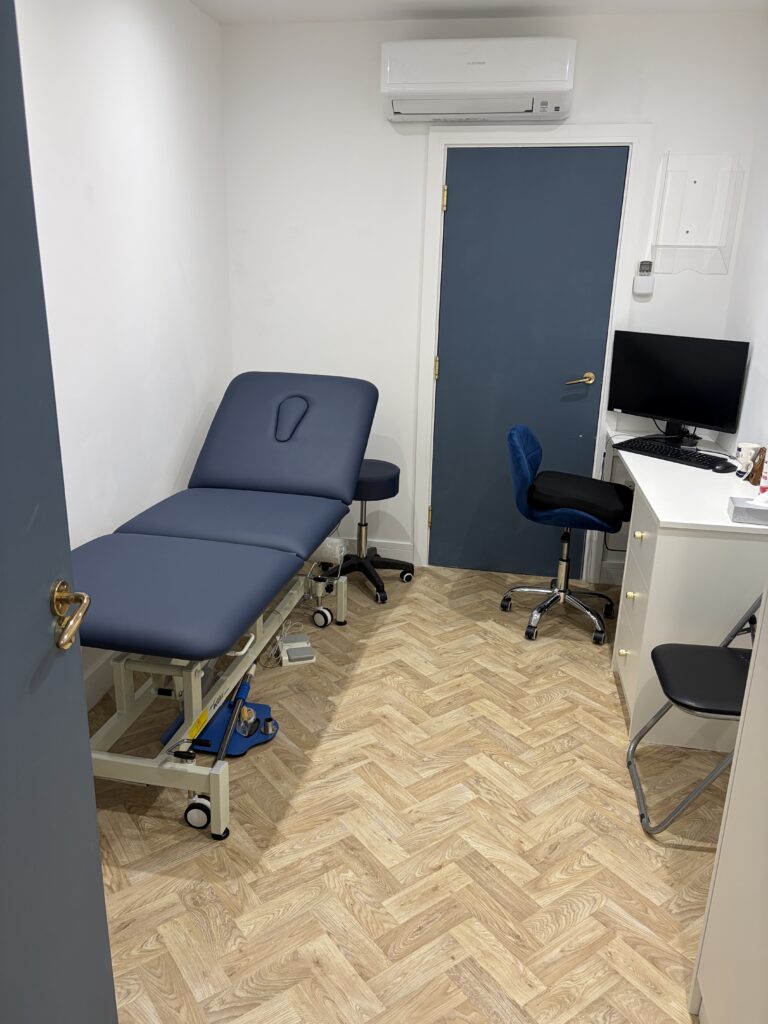
R-Health is physician-owned and physician-run. We work with employers across the UK, with assessments carried out remotely by Teams or telephone, on your premises, or at our clinic in Edgware, north-west London. See our occupational health assessment services or get in touch to discuss a referral.
Related guides
Sources: Acas, Phased returns; GOV.UK, The fit note: guidance for patients and employees.